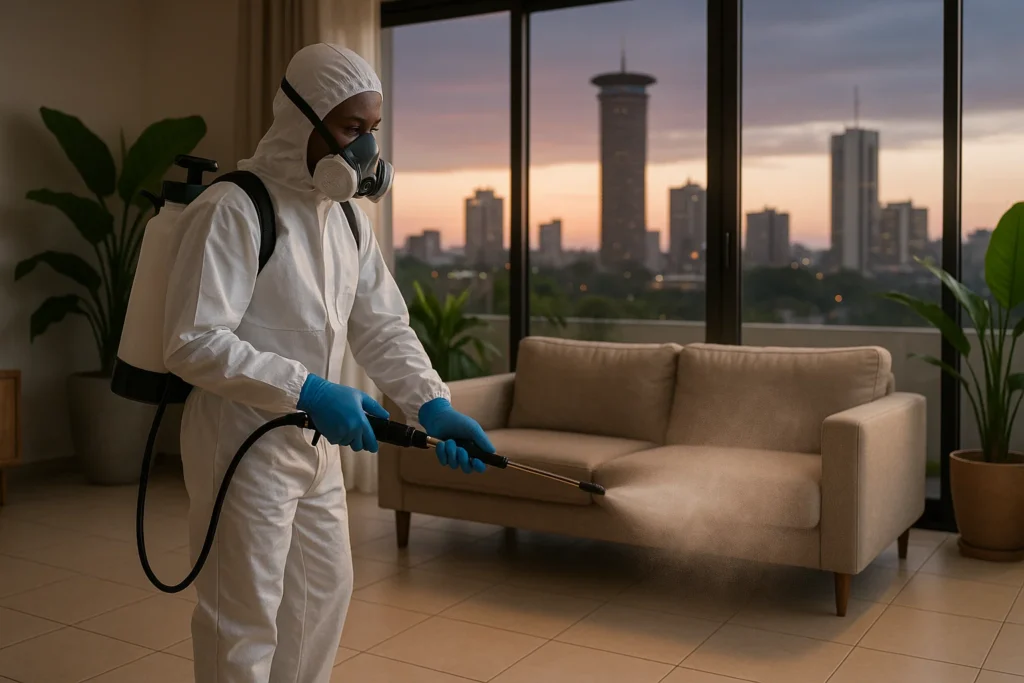
Every rainy season in Nairobi, many homes suddenly experience an increase in mosquitoes. What was once a quiet evening can quickly turn into a constant battle with buzzing insects and itchy bites.
The truth is that rain creates the perfect breeding conditions for mosquitoes, which is why their population rises rapidly during this time. Understanding why this happens can help homeowners take the right steps to reduce mosquito infestations and protect their families.
Why Rainy Seasons Create More Mosquitoes
Mosquitoes require standing water to reproduce. During the rainy season, water collects in many places around homes and neighborhoods, creating ideal breeding grounds.
Common places where mosquitoes breed include:
- Puddles and stagnant water around homes
- Open containers such as buckets and drums
- Blocked drainage systems
- Flower pots and plant trays
- Old tires and unused containers outside the house
Even very small amounts of water can support mosquito larvae. A bottle cap filled with water can sometimes be enough for mosquitoes to reproduce.
The Mosquito Life Cycle
Mosquito populations grow quickly because their life cycle is short.
- Egg stage – Female mosquitoes lay eggs on stagnant water.
- Larva stage – The eggs hatch into larvae that live in water.
- Pupa stage – Larvae transform into pupae before becoming adults.
- Adult mosquito – The adult mosquito emerges and begins searching for blood meals.
Under favorable conditions, this entire cycle can take as little as 7–10 days, which explains why mosquito populations increase so quickly during rainy periods.
Common Mosquito Breeding Areas in Nairobi Homes
Many mosquito problems start within the home compound. During inspections, pest control technicians often find breeding areas in places homeowners may not notice.
Typical problem areas include:
- Roof gutters filled with debris
- Water tanks that are not properly covered
- Containers left outside in the compound
- Drainage systems that do not flow properly
- Construction sites with stagnant water
Because Nairobi continues to experience rapid construction and urban growth, these environments can create more mosquito breeding spots.
Health Risks Associated With Mosquitoes
Mosquitoes are more than just a nuisance. Some species can transmit diseases that affect human health.
Possible mosquito-borne illnesses include:
- Malaria
- Dengue fever
- Chikungunya
Reducing mosquito populations around homes helps lower the risk of these infections.
How to Reduce Mosquito Breeding Around Your Home
Homeowners can take several simple steps to reduce mosquito activity during the rainy season.
1. Remove standing water
Empty containers, buckets, and other items that collect rainwater.
2. Clean roof gutters regularly
Blocked gutters often become hidden mosquito breeding areas.
3. Cover water storage containers
Ensure tanks and drums have proper lids.
4. Maintain proper drainage
Make sure water flows away from your home instead of collecting around it.
5. Use window screens and mosquito nets
These can reduce indoor mosquito activity.
When Professional Mosquito Control May Be Necessary
In some cases, mosquito populations become difficult to control using household methods alone. If the infestation is severe, professional pest control services can help eliminate breeding sites and reduce mosquito numbers effectively.
Professional treatments may include:
- Outdoor mosquito control treatments
- Larvae control in breeding areas
- Targeted fumigation in affected zones
Companies such as Cmart Touch Cleaning Services provide pest control solutions designed to help homes and businesses maintain a safer and more comfortable environment.
Final Thoughts
Mosquito populations naturally increase during the rainy season because water creates ideal breeding conditions. However, by removing stagnant water, maintaining clean surroundings, and addressing breeding sites early, homeowners can significantly reduce mosquito activity.
Regular inspections and preventive measures can help keep homes in Nairobi more comfortable and protected during the rainy months.